Table of Contents
- Introduction
- What Is Vitamin C and Why Do We Need It?
- Understanding the 2000mg Limit
- What Happens if You Take More Than 2000mg?
- The Reality of Vitamin C Absorption
- The Role of Bioflavonoids
- Who Might Need Higher Doses?
- Practical Dosing: Finding Your "Sweet Spot"
- Vitamin C and Collagen: The Perfect Pair
- Is More Always Better for the Immune System?
- Safety and Quality in Supplements
- Conclusion
- FAQ
Introduction
Whether you are trying to stay ahead of the changing seasons or pushing through a demanding training block, Vitamin C is likely at the top of your supplement list. Most of us grew up hearing that more is better when it comes to this essential nutrient. However, as you look at your supplement labels, you might notice that dosages can vary wildly, often reaching 1,000mg or 2,000mg per serving.
While Vitamin C is a critical pillar of health and performance, there is a point where your body simply stops using what you give it. We believe in providing clear, science-backed information so you can make informed choices about your wellness routine. At BUBS Naturals, our focus is on clean ingredients that serve a purpose, which is why we want to break down exactly what happens when you reach high doses of Vitamin C.
This guide will explain the safety of the 2,000mg threshold, how your body absorbs Vitamin C, and how to find the right balance for your lifestyle. We will help you understand the difference between meeting your daily needs and overdoing it.
Quick Answer: For most healthy adults, 2,000mg of Vitamin C is considered the "Tolerable Upper Intake Level" (UL), meaning it is the maximum amount you can likely take daily without seeing negative side effects. While taking 2,000mg is generally safe, it may cause digestive upset for some, and much of the excess is often excreted by the body rather than absorbed.
What Is Vitamin C and Why Do We Need It?
Vitamin C, also known as L-ascorbic acid, is a water-soluble vitamin. Unlike fat-soluble vitamins (like A, D, E, and K) that your body stores in fatty tissue for later use, water-soluble vitamins dissolve in water and are not stored in large amounts. This means your body needs a regular supply from food or supplements to maintain healthy levels.
This nutrient acts as a potent antioxidant. Antioxidants are molecules that help protect your cells from oxidative stress. When you train hard, your body produces free radicals—unstable molecules that can damage cells and lead to inflammation. Vitamin C helps neutralize these free radicals, which is why it is so popular among athletes and people with active lifestyles.
Beyond its role as an antioxidant, Vitamin C is essential for collagen synthesis. Collagen is the primary protein in your connective tissues, skin, and joints. Without adequate Vitamin C, your body cannot effectively produce or repair collagen, which can impact your recovery and long-term joint health. It also plays a role in iron absorption, immune function, and the health of your skin and hair.
Understanding the 2000mg Limit
When people ask if 2,000mg of Vitamin C is too much, they are usually referring to the Tolerable Upper Intake Level. Health organizations use this term to define the highest amount of a nutrient that most people can take daily without a risk of adverse effects. For adults over the age of 19, that number is set at 2,000mg.
It is important to distinguish this from the Recommended Dietary Allowance (RDA). The RDA is the amount you need to prevent deficiency and maintain basic health. For most men, the RDA is 90mg, and for most women, it is 75mg. As you can see, there is a massive gap between the 75-90mg needed for basic health and the 2,000mg upper limit.
Many people choose to take more than the RDA to support specific goals, such as enhanced recovery or immune support during high-stress periods. However, hitting that 2,000mg ceiling every single day might not provide the benefits you expect. Because Vitamin C is water-soluble, your body is very efficient at getting rid of what it doesn't need.
Why 2000mg?
The 2,000mg limit was established primarily because of the way the human digestive system reacts to high doses of Vitamin C. Once you exceed this amount, the likelihood of experiencing gastrointestinal (GI) distress increases significantly. Your gut has a limited capacity to transport Vitamin C into your bloodstream. When that capacity is exceeded, the remaining Vitamin C stays in your intestines, where it can draw in water and lead to discomfort.
Myth: Since Vitamin C is water-soluble, you can take as much as you want without any side effects.
Fact: While your body does flush out the excess, very high doses can still cause immediate digestive issues and may lead to other complications, like kidney stones in predisposed individuals, if taken consistently over long periods.
What Happens if You Take More Than 2000mg?
While Vitamin C has a high safety profile, "too much" usually manifests as digestive problems. If you have ever taken a high-dose supplement on an empty stomach and felt "off" shortly after, you have likely experienced the limit of your body’s absorption capacity.
Common side effects of exceeding the 2,000mg limit include:
- Diarrhea
- Nausea
- Abdominal cramps
- Bloating and gas
- Heartburn
These symptoms occur because unabsorbed Vitamin C acts as an osmotic agent in the bowel. Essentially, it pulls water into the colon, which speeds up digestion in a way that is usually unpleasant. For most people, these symptoms resolve quickly once they lower their dosage or stop taking the supplement.
Long-Term Considerations
While a one-time dose of 2,000mg or more might just cause a few hours of discomfort, consistently exceeding the upper limit can have other implications. One of the most discussed concerns is the formation of kidney stones. Vitamin C is metabolized into oxalate, a substance that is excreted in urine. In some people, high levels of oxalate can combine with calcium to form stones.
If you have a history of kidney stones or kidney disease, it is especially important to be cautious with high-dose Vitamin C. In these cases, even the 2,000mg limit might be too high. Always consult with a healthcare professional if you have underlying health conditions before starting a high-dose regimen.
Key Takeaway: The 2,000mg upper limit exists to prevent digestive distress and potential long-term issues like kidney stones. While occasionally reaching this limit is rarely dangerous for healthy adults, it is often more than the body can effectively use at once.
The Reality of Vitamin C Absorption
One of the most important things to understand about Vitamin C is that absorption is not linear. If you take 100mg, your body absorbs nearly all of it. If you take 1,000mg, the absorption rate drops significantly. By the time you get to 2,000mg in a single serving, your body may be absorbing less than 50% of what you've swallowed.
Your body uses specific transporters in the gut to move Vitamin C into the blood. These transporters can become saturated. Think of it like a doorway: if five people try to walk through at once, they all get through fine. If a thousand people try to rush the door at the same time, the doorway stays crowded, and most people stay outside.
Bioavailability and Dosing Strategies
Bioavailability refers to how much of a substance actually enters your circulation to have an effect. To maximize the bioavailability of Vitamin C, many experts suggest "split dosing." Instead of taking 2,000mg all at once, you might take 500mg four times throughout the day. This gives your gut transporters time to reset and move the nutrient into your system more efficiently.
This is why we focus on effective, manageable dosages. Our Vitamin C+ provides 500mg per serving. This amount is high enough to support your goals but low enough that your body can actually process and utilize the majority of the dose.
| Category |
Recommended Amount (RDA) |
Upper Limit (UL) |
Common Supplement Dose |
| Adult Men |
90 mg |
2,000 mg |
500 mg - 1,000 mg |
| Adult Women |
75 mg |
2,000 mg |
500 mg - 1,000 mg |
| Smokers |
+35 mg (above RDA) |
2,000 mg |
500 mg - 1,000 mg |
| Athletes/Active |
Likely higher than RDA |
2,000 mg |
500 mg - 1,000 mg |
Bottom line: Taking 2,000mg of Vitamin C in one sitting is often wasteful because your body’s absorption mechanisms become saturated, leading to lower bioavailability and potential digestive upset.
The Role of Bioflavonoids
In nature, Vitamin C doesn't exist in isolation. When you eat an orange or a bell pepper, you aren't just getting ascorbic acid; you are also getting bioflavonoids. Bioflavonoids are plant-based compounds that work in tandem with Vitamin C to improve its function.
Research suggests that bioflavonoids may help increase the absorption of Vitamin C and protect it from oxidation within the body. They also have their own antioxidant properties, which can help support blood vessel health and a healthy inflammatory response.
When looking at supplements, many "no-BS" formulas include these citrus bioflavonoids because they mimic how Vitamin C is found in real food. This synergy is a key part of our Vitamin C formula. By including bioflavonoids, we help ensure that the 500mg you take is working as hard as possible for your recovery and wellness.
Who Might Need Higher Doses?
While the RDA is low, certain groups of people may benefit from moving closer to the upper limit—though usually not exceeding the 2,000mg mark without specific guidance.
Athletes and High-Intensity Trainers
Physical exertion increases oxidative stress. Athletes often utilize higher doses of Vitamin C to support the immune system, which can be temporarily suppressed after grueling workouts. It also supports the collagen structures in your tendons and ligaments, which take a beating during heavy lifting or long-distance running.
Individuals Under High Stress
Cortisol, the body’s primary stress hormone, can deplete Vitamin C stores. During periods of high mental or physical stress, your body’s demand for antioxidants increases. Maintaining levels near the higher end of the spectrum (500mg to 1,000mg) can be a useful tool for managing the physical toll of stress.
Smokers and Environmental Exposure
Smoking increases the amount of oxidative damage in the body significantly. Health organizations recommend that smokers take at least an extra 35mg of Vitamin C daily compared to non-smokers, but many practitioners suggest even higher amounts to help combat the increased toxic load.
Practical Dosing: Finding Your "Sweet Spot"
If 2,000mg is the limit, where should you actually aim? For most people focused on fitness and general wellness, the sweet spot is often between 500mg and 1,000mg per day. This range provides ample support for immune function and collagen production without hitting the point of diminishing returns or causing stomach issues.
Here is a simple way to approach your Vitamin C routine:
-
Start with a clean base: Aim for a diet rich in fruits and vegetables.
-
Supplement with purpose: Use a 500mg dose of high-quality Vitamin C to fill the gaps, especially if you are active.
-
Listen to your gut: If you experience any digestive changes, scale back your dosage.
-
Timing matters: Some people find that taking Vitamin C with a meal helps with absorption and prevents any potential stomach irritation.
At BUBS Naturals, we designed our Vitamin C to be a straightforward part of your day. It provides 500mg of Vitamin C alongside citrus bioflavonoids. This dosage is intentional. It is enough to be effective and support your body's natural collagen formation, but it stays well within the safe upper limits, ensuring you feel great while taking it.
Vitamin C and Collagen: The Perfect Pair
Because Vitamin C is a necessary cofactor for collagen synthesis, it is often taken alongside collagen peptides. If you are already using collagen to support your joints, skin, or recovery, adding Vitamin C is like adding fuel to the fire.
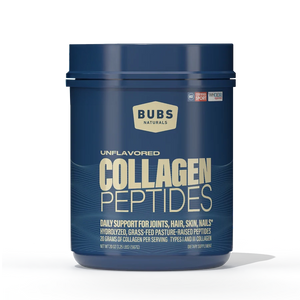
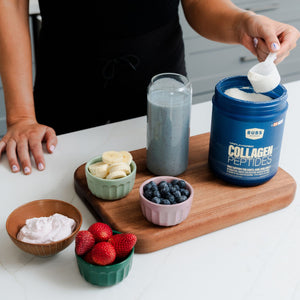
If you want to pair your routine with a clean protein support, Grass-Fed Collagen Peptides Powder is the most direct match. The enzymes responsible for "knitting" collagen fibers together cannot function without Vitamin C. If you are deficient, your collagen supplement won't be nearly as effective. While you don't need 2,000mg to make this happen, ensuring you have a steady supply of Vitamin C in the 500mg to 1,000mg range ensures your body has exactly what it needs to rebuild and repair.
For a deeper look at the ingredient itself, What Are Collagen Peptides and Their Benefits? is a helpful next step.
Is More Always Better for the Immune System?
One of the biggest drivers for taking 2,000mg of Vitamin C is the desire for a "bulletproof" immune system. While Vitamin C is vital for the function of white blood cells and the health of your skin (your body’s first line of defense), more is not always better.
Once your tissues are saturated with Vitamin C, taking more does not provide extra "protection." Your body maintains a specific level of Vitamin C in its cells. When that level is reached, the surplus is simply sent to the kidneys for excretion. Regular, consistent intake of a moderate dose is generally more effective for long-term health than sporadic, mega-doses that your body can't actually use.
Key Takeaway: Consistency beats intensity when it comes to Vitamin C. A daily dose that your body can actually absorb is far more beneficial than a massive dose that causes digestive distress and ends up being flushed away.
Safety and Quality in Supplements
When you are reaching for higher doses of any supplement, quality becomes even more important. Many mass-market Vitamin C supplements use low-quality fillers or synthetic coatings that can interfere with how the nutrient is broken down in your stomach.
We believe in transparency and purity. Our products are third-party tested, and we focus on simple, functional ingredients. When you take our Vitamin C+, you know you are getting 500mg of L-ascorbic acid and citrus bioflavonoids without the "BS" fillers. This commitment to quality is rooted in our mission to provide the best possible support for your active lifestyle, inspired by the legacy of Glen “BUB” Doherty’s story.
If hydration is part of your recovery routine, the Hydration Collection is another natural place to look, especially during hard training blocks or hot-weather sessions. For a broader look at the brand’s performance-focused products, browse the Boosts collection.
Conclusion
So, is 2,000mg of Vitamin C too much? For most people, it isn't "dangerous," but it is often unnecessary and can lead to unpleasant side effects like bloating or diarrhea. The 2,000mg mark is the ceiling, not the target. By staying in a range that your body can efficiently absorb—like 500mg to 1,000mg—you ensure you are getting the antioxidant and collagen-supporting benefits without the waste.
If you want to keep learning about how supplements fit into a training and wellness routine, Does Electrolyte Water Work? Your Guide to Smart Hydration is a useful companion read. Focus on a consistent routine that supports your activity levels and honors your body's limits. We are here to provide the clean, high-quality tools you need to stay in the game, whether that’s on the trail, in the gym, or in your daily life. Every purchase also supports a greater cause, as we donate 10% of all profits to veteran-focused charities in BUB’s honor.
Take your recovery seriously, keep your ingredients clean, and listen to what your body tells you.
FAQ
Can I take 2000mg of Vitamin C every day?
Yes, 2,000mg is the Tolerable Upper Intake Level for adults, meaning it is generally safe for daily use. However, many people find that this amount causes digestive issues like diarrhea or gas. For most active individuals, a daily dose of 500mg to 1,000mg is sufficient and better absorbed.
What are the signs that I’ve taken too much Vitamin C?
The most common signs of excessive Vitamin C intake are gastrointestinal distress, including nausea, stomach cramps, and diarrhea. Because Vitamin C is water-soluble, these symptoms usually disappear quickly once you reduce your intake. If you experience persistent issues, you should lower your dose and consult a healthcare provider.
Does 2000mg of Vitamin C help with a cold?
While Vitamin C is essential for immune function, research suggests that taking mega-doses once you are already sick has a limited impact on the duration of a cold. Consistent daily intake is more effective for supporting your immune system over time. Staying within a moderate range (500-1,000mg) daily is often a better strategy than taking 2,000mg only when you feel unwell.
Who should avoid taking 2000mg of Vitamin C?
People with a history of kidney stones or chronic kidney disease should avoid high-dose Vitamin C supplements, as excess Vitamin C can increase oxalate levels in the urine. Additionally, individuals with conditions like hemochromatosis (iron overload) should be cautious, as Vitamin C increases iron absorption. Always check with your doctor if you have these or other medical conditions.