At 2 a.m. on November 1st, the clocks fell back. Daylight saving time ended, and most of us got something we almost never get: a free extra hour of sleep.
If you woke up feeling a little sharper, a little lighter, a little more like yourself, that's not in your head. One more hour of sleep does real work. Here's what that hour actually does, and how to get it back on purpose, every night, without waiting another year for the clocks to change.
What One More Hour Actually Does
1. It's when your muscles rebuild
Training breaks muscle down. Sleep is when your body builds it back. In a 2021 study, just one night without sleep cut muscle protein synthesis (the process your body uses to repair and build muscle) by 18% in healthy young adults. You don't have to pull an all-nighter for this to matter. Every short night chips away at the recovery you earned in your workout.
2. It makes you faster and more accurate
In a well-known Stanford study, men's basketball players aimed for 10 hours in bed each night for five to seven weeks. Their sprint times dropped from 16.2 to 15.5 seconds, and their free throw and three-point shooting each improved by about 9%. You may not be shooting free throws this week, but the same principle applies to your morning run, your lift, or your pickleball game: rested bodies perform better.
3. It keeps stress in check
Sleep and stress feed each other. In that same 2021 study, one night of sleep deprivation raised cortisol, the body's main stress hormone, by 21% and lowered testosterone by 24%. Less sleep means a body that's more wound up and less ready to recover. A full night helps reset that balance.
4. It shows up in your energy and mood
There's a reason everything feels harder after a bad night. Focus slips, patience runs thin, and that 3 p.m. slump hits early. Consistent, sufficient sleep is one of the simplest ways to feel more like yourself during the day.
Most of Us Are Running a Deficit
Adults need at least 7 hours of sleep a night, according to the CDC. Yet about a third of U.S. adults regularly get less than that. Long workdays, late screens, and early alarms add up, which is why one extra hour can feel so noticeable. For a lot of us, it's the first full night we've had in a while.
The good news: you don't need a clock change to get that hour back. You need a few habits that make good sleep the default.
5 Ways to Get That Hour Back (Without Waiting a Year)
1. Pick a wake-up time and keep it
Consistency matters more than any single long night. Waking up at the same time every day, weekends included, helps set your internal clock so falling asleep at night gets easier. Start with your wake time, then work backward to a bedtime that gives you 7+ hours.
2. Keep your coffee in the morning
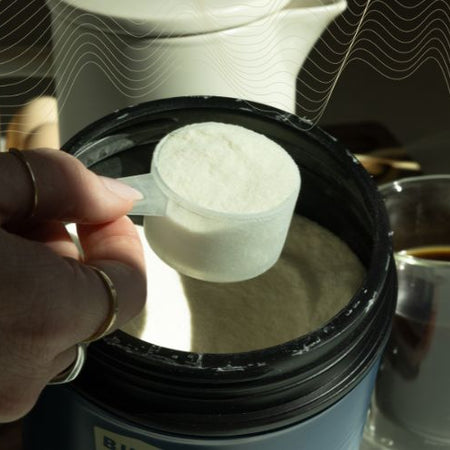
We love coffee as much as anyone (it's kind of our thing). But caffeine can stay in your system for hours, so a late-afternoon cup can quietly push your bedtime back. Make your morning cup count instead. Stir in a scoop of Collagen Peptides and MCT Oil Creamer, and your one cup does a lot more than wake you up. Then cut the caffeine after about 2 p.m.
3. Build a 30-minute wind-down
Your body needs a runway. Give yourself 30 minutes before bed with no work email and no doom-scrolling. Try screens off (or at least face down), lights low, and something easy to read. The same routine every night tells your brain it's time to shut down.
4. Make your room cool, dark, and quiet
A cooler room, blackout curtains or an eye mask, and a little white noise can make a real difference. Your bedroom should be built for one thing, and it's not answering texts.
5. Get morning light
The fall-back shift means brighter mornings and darker evenings for the next few weeks, so use it. Get outside within an hour of waking, even for 10 minutes with your coffee. Morning light helps anchor your body clock, which makes it easier to feel sleepy at the right time later.
Your Best Morning Starts the Night Before
At BUBS, we've spent years helping you build a better morning: the coffee, the scoop, the start of the day. But the truth is, a great morning starts the night before. Recovery, energy, and stress all come back to how well you sleep.
That's why we've been working on something for the other half of your day. It drops this week. Keep an eye on your inbox. 👀
In the meantime, make tomorrow's coffee count.
SHOP COLLAGEN
FAQ
Does daylight saving time really give you an extra hour of sleep?
Yes, on the night it ends. When clocks fall back at 2 a.m. on the first Sunday of November, the night is 25 hours long, so most people get an extra hour in bed. The catch is that your body clock takes a few days to adjust, so keep your usual wake-up time this week.
How much sleep do adults need?
The CDC recommends at least 7 hours a night for adults. Athletes and people who train hard often benefit from more.
Can I catch up on sleep on the weekend?
Sleeping in can help you feel better short term, but big swings between weekday and weekend sleep can throw off your body clock. A consistent schedule all week is the better long-term fix.
Is it bad to drink coffee in the afternoon?
Caffeine can linger for hours, so an afternoon cup can make it harder to fall asleep. If sleep is a struggle, keep your coffee to the morning.