Table of Contents
- Introduction
- Understanding the Roles of Collagen and Iron
- Can Collagen and Iron Be Taken Together?
- Maximizing Your Nutrient Routine
- Timing Your Supplements for Best Results
- Common Mistakes to Avoid
- Conclusion
- FAQ
Introduction
Determining the right combination of supplements can feel like a full-time job. You want to support your joints, skin, and energy levels without one nutrient canceling out the other. Many active adults find themselves looking at two specific powerhouses: collagen and iron. One is the primary structural protein in your body, while the other is an essential mineral responsible for moving oxygen through your blood.
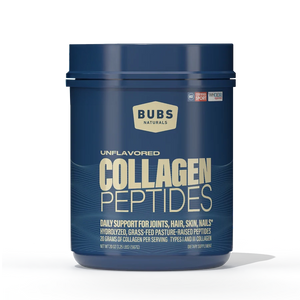
At BUBS Naturals, we focus on helping you find the simplest, cleanest ways to support your wellness journey through evidence-based nutrition. Start with our Collagen Peptides.
Understanding how these nutrients interact is key to feeling your best, whether you are training for a marathon or simply looking to maintain your daily vitality. You can take collagen and iron together, and in many cases, doing so may even support your body’s ability to use these nutrients more effectively.
Quick Answer: Yes, you can take collagen and iron together. Some research suggests that the amino acid glycine found in collagen can actually help support iron absorption, and there is no evidence that they interfere with each other when taken simultaneously.
Understanding the Roles of Collagen and Iron
To understand why you might want to combine these two, it is helpful to first look at what they do individually. Both serve as foundational elements for an active body, but they operate in very different ways.
Collagen: The Body’s Structural Framework
Collagen is the most abundant protein in your body. It acts as the "glue" that holds everything together, providing structure to your skin, hair, nails, tendons, ligaments, and bones. There are several types of collagen, but Types I and III are the most common in the human body and are primarily responsible for the strength and elasticity of your tissues.
As we age, our natural production of this protein begins to decline. This is why many people turn to supplementation. Most high-quality supplements use collagen peptides, which means the protein has been broken down into smaller chains called peptides. This process makes the collagen more bioavailable, meaning your body can absorb and use it more easily than it could from food sources alone.
Iron: The Energy Mineral
Iron is a critical mineral that supports the production of hemoglobin. Hemoglobin is a protein in your red blood cells that carries oxygen from your lungs to the rest of your body. Without enough iron, your cells cannot get the oxygen they need, which often leads to feelings of fatigue, weakness, and poor physical performance.
Iron comes in two forms: heme iron, which is found in animal products, and non-heme iron, which comes from plant-based sources. Heme iron is generally easier for the body to absorb. Because iron is lost through sweat and metabolic processes, athletes and highly active individuals often need to pay closer attention to their iron levels to maintain their energy and recovery.
Can Collagen and Iron Be Taken Together?
The short answer is a definitive yes. In the world of supplements, some nutrients compete for the same absorption pathways. For example, high doses of calcium can sometimes interfere with iron uptake. However, collagen and iron do not share this competitive relationship.
The Science of Simultaneous Supplementation
Taking collagen and iron together is generally considered safe and effective. Because collagen is essentially a food-based protein, your body treats it much like it would a piece of meat or a bowl of bone broth. Most vitamins and minerals are designed to be processed alongside protein and amino acids.
There is no scientific evidence to suggest that collagen peptides block the receptors that iron needs to enter your bloodstream. In fact, many people find that taking them together simplifies their morning or post-workout routine, making it easier to stay consistent with their goals.
How Glycine Supports Iron Metabolism
Collagen is uniquely high in an amino acid called glycine. Glycine plays several roles in the body, including supporting the nervous system and helping to build muscle. However, in the context of iron, glycine is particularly interesting. Some studies have indicated that glycine can form a bond with iron, potentially making the mineral more stable as it passes through the digestive tract.
Key Takeaway: The relationship between collagen and iron is synergistic rather than competitive. The amino acid profile of our Collagen Peptides provides the building blocks your body needs to maintain structural integrity, while the glycine content may support the transport and utilization of iron in your system.
Maximizing Your Nutrient Routine
While you can take these two together, simply "taking them" is only part of the equation. To get the most out of your supplements, you need to consider the environment in which they are absorbed.
The Crucial Role of Vitamin C
Vitamin C is the ultimate partner for both collagen and iron. When it comes to collagen, Vitamin C is a necessary cofactor for collagen synthesis. This means your body literally cannot build new collagen fibers without it. If you are taking a collagen supplement but are deficient in Vitamin C, you are not getting the full benefit.
When it comes to iron, Vitamin C significantly increases the absorption of non-heme iron. It helps convert the iron into a form that is more easily taken up by the small intestine. For this reason, we recommend pairing your iron and collagen with a high-quality Vitamin C supplement. Our Vitamin C supplement provides 500 mg with citrus bioflavonoids to ensure you are creating the best possible environment for nutrient uptake.
Why Gut Health Matters for Nutrient Uptake
Absorption starts in the gut. If your digestive lining is inflamed or compromised, it does not matter how many high-quality supplements you take; your body will struggle to absorb them. Collagen contains amino acids like glutamine and proline, which are known to support the integrity of the gut lining.
Bottom line: By supporting your gut health with collagen, you may actually be improving your body’s ability to absorb iron and other essential minerals from your diet. For a deeper look at the bigger picture, read our Collagen Protein Benefits.
Myth: You should never take protein and minerals at the same time.
Fact: Most minerals, including iron, are naturally found in protein-rich foods. Taking collagen with iron mimics a natural food matrix and is perfectly safe.
Timing Your Supplements for Best Results
Timing can play a role in how you feel and how well your body processes what you give it. While there is no "perfect" time that applies to everyone, there are some general guidelines that can help you optimize your routine.
Taking Iron: Empty Stomach vs. Food
Iron is often best absorbed on an empty stomach. However, many people find that iron supplements can cause nausea or digestive discomfort when taken without food. If you have a sensitive stomach, taking your iron with a light snack or your collagen drink is a great way to mitigate these side effects without significantly hindering absorption.
If you choose to take iron with food, avoid pairing it with high-calcium foods like cheese or yogurt, as calcium can compete with iron for absorption. Instead, mix your collagen into a glass of water with a squeeze of lemon or a Vitamin C supplement.
Incorporating Collagen into Your Daily Flow
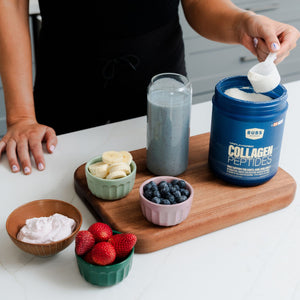
Consistency is more important than the specific hour of the day for collagen. Whether you prefer it in your morning coffee, your post-workout shake, or a glass of water before bed, the key is making it a daily habit. Because collagen is heat-stable, you can mix it into hot or cold liquids without damaging the peptides.
If you are an athlete, taking your collagen about 30 to 60 minutes before a training session may help deliver the necessary amino acids to your joints and tendons while they are under load. If you are also taking iron to support energy, this pre-workout window can be an effective time for both.
Note: If you are taking an iron supplement specifically for a diagnosed deficiency like anemia, follow your doctor's specific instructions regarding timing and dosage.
Common Mistakes to Avoid
Even the best supplements can be undermined by a few common errors in how they are used. To ensure you are getting the most out of your BUBS Naturals products, keep these factors in mind.
The Calcium and Iron Interaction
Calcium is one of the few nutrients that can actively hinder iron absorption. If you are taking a separate calcium supplement or a multivitamin high in calcium, try to space it at least two hours apart from your iron intake. While collagen does not contain high levels of calcium, be mindful of what you mix it with. Mixing your collagen and iron into a large glass of milk, for example, might reduce the amount of iron your body actually absorbs.
Quality Matters: Choosing Clean Supplements
Not all supplements are created equal. The supplement industry is often filled with fillers, artificial sweeteners, and low-quality sourcing. When you take iron or collagen, you want to ensure you aren't also ingesting "extras" that can cause inflammation or digestive distress.
We take pride in the fact that our products are third-party tested and NSF for Sport certified. This means what is on the label is exactly what is in the jar. Our Collagen Peptides are sourced from grass-fed, pasture-raised bovine to ensure a clean, effective product that mixes effortlessly into any liquid. When you choose high-quality sources, you reduce the risk of contaminants that could interfere with your body's metabolic processes.
| Supplement |
Best Time to Take |
Key Companion |
Main Benefit |
| Collagen Peptides |
Morning or Pre-Workout |
Vitamin C |
Joint, skin, and gut support |
| Iron |
Empty stomach or with light snack |
Vitamin C |
Energy and oxygen transport |
| Vitamin C |
With Iron/Collagen |
Bioflavonoids |
Synthesis and absorption |
Conclusion
Combining collagen and iron is a safe and potentially beneficial way to support your body’s structural integrity and energy levels. By providing the amino acids necessary for tissue repair and the mineral required for oxygen transport, you are giving your body the tools it needs to perform and recover. Remember that the presence of Vitamin C is the "secret sauce" that helps both of these nutrients work more effectively.
At BUBS Naturals, we believe that wellness should be simple and grounded in purpose. Our products are designed to fit into your active lifestyle without the need for a chemistry degree to understand the label. We are also committed to a larger mission: in honor of Glen "BUB" Doherty, we donate 10% of all our profits to veteran-focused charities through our 10% Rule. This means that every scoop you take supports not just your own health, but a community of heroes.
Take the next step in your recovery routine by ensuring you have a clean source of protein and the essential cofactors your body needs. Start with a daily serving of our Collagen Peptides and see how a focused, high-quality routine can change the way you feel during your next adventure.
FAQ
Can I mix collagen powder directly with my iron supplement?
Yes, you can take them at the same time. If your iron is in pill form, you can simply wash it down with your collagen drink. If you are using a liquid iron supplement, you can mix it into the same water or juice as your collagen powder without any negative interactions. For more context, read our Vitamin C and Collagen guide.
Does collagen help with anemia?
While collagen is not a treatment for anemia, it may support individuals with iron deficiency by providing glycine. Glycine has been shown in some studies to support iron absorption and metabolism. However, you should always consult with a healthcare professional to manage a diagnosed condition like anemia.
Will taking collagen with iron cause stomach upset?
Most people tolerate this combination well, but iron on its own is known to cause mild digestive issues for some. Taking your iron with collagen can actually help, as the collagen peptides provide a small amount of "food" for the stomach to process, which may reduce nausea. If you have a very sensitive stomach, start with a smaller dose of each.
Should I take Vitamin C with my collagen and iron?
Yes, Vitamin C is highly recommended when taking both. It acts as a necessary trigger for your body to produce its own collagen from the peptides you ingest and significantly boosts the absorption of non-heme iron. A simple squeeze of lemon or a Vitamin C supplement is an easy way to maximize your results.