Table of Contents
- Introduction
- Understanding the Role of Collagen in Your Body
- Does Collagen Help with Muscle Pain and DOMS?
- Collagen vs. Whey Protein: Which Is Better for Muscle?
- How Collagen Supports Your Tendons and Ligaments
- The Importance of Hydrolyzed Collagen Peptides
- The Role of Vitamin C in Collagen Synthesis
- Daily Habits That Protect Your Existing Collagen
- How to Use Collagen for Maximum Recovery
- Why Quality Matters: The BUBS Standard
- Key Takeaway: A Holistic Approach to Pain
- Conclusion
- FAQ
Introduction
You finish a grueling training session or a long day in the field, and you know what is coming. The stiffness sets in. By the next morning, walking down the stairs feels like a tactical maneuver. This is muscle pain in its most common form, and most of us look for any clean, effective tool to help us bounce back faster.
Lately, collagen has moved from the beauty aisle to the gym bag. People are asking if this structural protein does more than just help your skin look better. Specifically, you want to know: is collagen good for muscle pain? At BUBS Naturals, we believe in looking at the science to see how these supplements actually function in an active body.
This guide will break down the relationship between collagen and muscle recovery. We will explore how it supports the connective tissues that house your muscles, why it differs from your standard protein shake, and how to use it as part of a high-performance routine with our Boosts collection. We are here to separate the marketing hype from the biological reality of how collagen works.
Quick Answer: While collagen is not a direct muscle-builder like whey protein, research suggests it may help reduce muscle soreness and joint pain by supporting the connective tissues and extracellular matrix surrounding muscle fibers. Taking 10–20 grams of hydrolyzed collagen daily may support faster recovery times after strenuous exercise.
Understanding the Role of Collagen in Your Body
Collagen is the most abundant protein in your body. Think of it as the biological glue or the scaffolding that holds everything together. It makes up about 30% of your total protein and is the primary component of your skin, bones, tendons, ligaments, and cartilage.
There are at least 28 different types of collagen, but three types do the heavy lifting in your body. Type I is found in almost all connective tissue and provides immense structural strength. Type III is often found alongside Type I and is highly prevalent in your muscles and blood vessels. When we talk about muscle pain and recovery, these two types are the most relevant.
Your body naturally produces collagen by breaking down the protein you eat into amino acids. However, as we age—starting as early as your 20s—that natural production slows down. This decline can lead to stiffer joints, thinner skin, and slower recovery after physical activity.
The Composition of Collagen
Unlike many other proteins, collagen has a unique amino acid profile. It is exceptionally high in three specific amino acids: glycine, proline, and hydroxyproline. These three work together to form a triple-helix structure. This structure is what gives your tissues their elasticity and strength.
When you take a collagen supplement, you are providing your body with the specific raw materials it needs to repair and maintain these structures. This is why many people find that supplementing helps fill the gaps that a standard diet might miss.
Does Collagen Help with Muscle Pain and DOMS?
Delayed Onset Muscle Soreness (DOMS) is the technical term for the pain you feel 24 to 48 hours after a hard workout. It is caused by microscopic tears in the muscle fibers and the surrounding connective tissue. This triggers an inflammatory response as your body works to repair the damage.
While most people focus on the muscle fiber itself, the connective tissue—specifically the fascia—plays a massive role in how you perceive pain. Collagen is the primary building block of this fascia. If the connective tissue around your muscles is weak or degraded, the repair process can feel more painful and take longer.
Research on Recovery
Several studies have looked at the effects of collagen peptides and muscle recovery on exercise-induced muscle damage. Some research indicates that athletes who take collagen daily report less muscle soreness after strenuous activity compared to those who do not.
The theory is that collagen supports the structural integrity of the extracellular matrix (ECM). The ECM is a network that provides support to the muscle cells. By strengthening this network, you may reduce the degree of microscopic damage that occurs during exercise, leading to a faster return to baseline performance.
Key Takeaway: Collagen helps maintain the structural integrity of the fascia and extracellular matrix surrounding your muscles. By supporting these "support structures," collagen can help minimize the intensity of muscle soreness and may speed up the physical recovery process after a hard effort.
Collagen vs. Whey Protein: Which Is Better for Muscle?
A common point of confusion is whether collagen can replace whey or other complete proteins for muscle growth. To answer the question of whether collagen is good for muscle pain, we have to look at its limitations.
Muscle protein synthesis (MPS) is the process of building new muscle tissue. To maximize MPS, your body needs all nine essential amino acids. Collagen is an "incomplete" protein because it lacks tryptophan, one of those nine essentials.
Why You Need Both
Whey protein is rich in branched-chain amino acids (BCAAs), specifically leucine, which acts as a "trigger" for muscle growth. If your goal is to add size and raw strength, whey or a complete plant-based protein is your primary tool.
However, collagen excels where whey falls short. While whey builds the "meat" of the muscle, collagen builds the "casing" and the "cables" (tendons and ligaments). If you have massive muscles but weak tendons, you are at a higher risk for injury and chronic pain. Using both ensures you are supporting the entire musculoskeletal system.
Myth: Collagen is a replacement for whey protein because it has high protein content.
Fact: Collagen is an incomplete protein and lacks the leucine levels required to trigger muscle growth effectively. It should be used as a supplement to—not a replacement for—complete protein sources.
How Collagen Supports Your Tendons and Ligaments
Muscle pain is often indistinguishable from tendon or ligament pain, especially near the joints. If you feel a sharp ache in your elbow during curls or a dull throb in your knee during squats, it might not be the muscle itself that is hurting.
Tendons connect muscle to bone. Ligaments connect bone to bone. Both are almost entirely made of collagen. These tissues are "hypovascular," meaning they have a limited blood supply compared to muscles. This is why a muscle strain heals in weeks, while a ligament tear can take months.
Improving Elasticity and Power
When you supplement with hydrolyzed collagen, you provide the building blocks that these slow-healing tissues need. This can lead to improved elasticity. Better elasticity means your tendons can better absorb and transmit the force generated by your muscles.
When your tendons and ligaments are healthy, your muscles don't have to compensate for joint instability. This reduces the overall strain on your muscle fibers and can lead to a significant reduction in chronic aches that people often mistake for simple muscle soreness.
The Importance of Hydrolyzed Collagen Peptides
If you look at the back of a supplement tub, you will likely see the term "hydrolyzed collagen" or "collagen peptides." This is important. In its natural state, collagen is a massive molecule that is very difficult for the human body to digest and absorb.
Hydrolysis is a process that uses enzymes to break these large collagen molecules down into smaller chains called peptides. These peptides are "bioavailable," meaning they can pass through the gut wall and enter the bloodstream more efficiently.
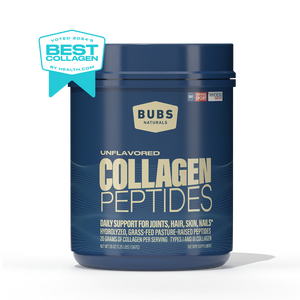
Our Collagen Peptides at BUBS Naturals are grass-fed and pasture-raised, ensuring you get a clean source of these peptides. Because they are hydrolyzed, they mix effortlessly into hot or cold liquids, making them easy to add to your daily routine without clumping or changing the taste of your coffee or shake.
The Role of Vitamin C in Collagen Synthesis
You cannot talk about collagen without mentioning Vitamin C. This vitamin acts as a critical cofactor in the production of collagen within your body. Without enough Vitamin C, the enzymes responsible for "cross-linking" the collagen fibers cannot function.
Think of collagen as a rope. Vitamin C is what helps braid the individual strands together to make that rope strong. If you are taking a collagen supplement but are deficient in Vitamin C, you are not getting the full benefit.
This is why many athletes choose to take their collagen with a splash of orange juice or a Vitamin C supplement. It ensures that once those peptides enter your system, your body has the tools required to actually put them to work in your muscles and joints.
Daily Habits That Protect Your Existing Collagen
While supplementation is a powerful tool, it is equally important to protect the collagen your body already has. Certain lifestyle factors can accelerate the breakdown of collagen, leading to more frequent muscle pain and slower recovery times.
-
Excessive Sugar Intake: High sugar consumption leads to a process called glycation. This is where sugar molecules attach to collagen fibers, making them brittle and prone to breaking.
-
UV Exposure: Too much sun without protection can break down the collagen in your skin and deeper tissues over time.
-
Smoking: Smoking reduces blood flow to your tissues and introduces toxins that directly damage collagen and elastin.
-
Lack of Sleep: Your body does the majority of its structural repair while you sleep. Chronic sleep deprivation stunts the production of growth hormones that facilitate collagen synthesis.
By combining a clean supplement routine with these protective habits, you create an environment where your body can thrive and recover with less pain.
How to Use Collagen for Maximum Recovery
To get the most out of collagen for muscle pain, consistency and timing matter. While you can take collagen at any time of day, there are specific protocols that many athletes follow to maximize the benefit to their connective tissues.
The Pre-Workout Protocol
Some evidence suggests that taking collagen 30 to 60 minutes before physical activity may be beneficial. When you exercise, the increased blood flow to your muscles and tendons helps "shuttle" the available amino acids in your bloodstream directly to the tissues that are being stressed.
The Daily Maintenance Routine
For most people, a daily dose of 10 to 20 grams is the standard. This ensures a steady supply of glycine and proline are available for general maintenance of the skin, gut lining, and joints.
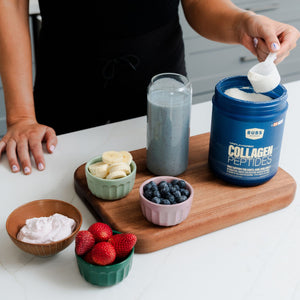
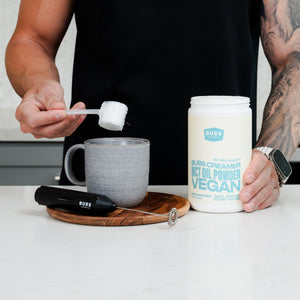
Our formula is designed to be versatile. You can toss a scoop into your morning coffee, mix it into a post-workout smoothie, or even stir it into a bowl of oatmeal. The goal is to make it a habit you don't have to think about.
Note: Collagen turnover is a slow process compared to muscle protein synthesis. While you might feel the "pump" from a pre-workout drink immediately, the structural benefits of collagen usually take 4 to 8 weeks of consistent use to become noticeable.
Bottom line: For best results, aim for 10–20g of hydrolyzed collagen daily. Pair it with a source of Vitamin C and try to take it within an hour of your training session to capitalize on increased blood flow to your connective tissues.
Why Quality Matters: The BUBS Standard
Not all collagen is created equal. Because the supplement industry is often poorly regulated, you have to be careful about what you are putting into your body. Some products contain fillers, artificial flavors, or are sourced from animals raised in poor conditions.
At BUBS Naturals, we prioritize transparency and purity. Our collagen is third-party tested and NSF for Sport certified. This means it has been rigorously screened for contaminants and banned substances. Whether you are a professional athlete or a weekend warrior, you need to know that what is on the label is exactly what is in the tub.
We source our collagen from grass-fed, pasture-raised cattle. This results in a cleaner, more sustainable product that aligns with our mission of providing high-quality fuel for your adventures.
Key Takeaway: A Holistic Approach to Pain
Is collagen good for muscle pain? Yes, but it is one piece of the puzzle. Muscle pain is a complex signal from your body. To manage it effectively, you need a holistic approach that includes:
-
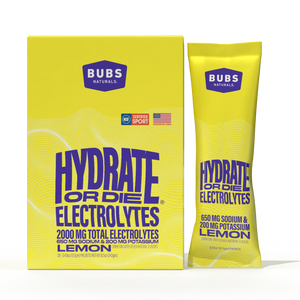
Hydrate or Die: Keeping your tissues hydrated ensures they stay pliable.
-
Adequate Protein: Use complete proteins (like whey or meat) for muscle fiber repair.
-
Collagen Support: Use collagen peptides to support the fascia and joints.
-
Smart Movement: Active recovery, such as walking or light stretching, helps move nutrients to the areas that need them most.
By addressing the structural needs of your body through collagen, you are not just masking the pain; you are providing the foundation for a more resilient physical frame.
Key Takeaway: Collagen should be viewed as "structural insurance" for your body. It fills the gap left by modern diets and aging, supporting the tendons and fascia that often become the primary source of pain and limitation during high-intensity training.
Conclusion
Muscle pain doesn't have to be a permanent side effect of an active life. While collagen isn't a "miracle" that will make soreness disappear overnight, it is a scientifically backed tool that supports the very foundations of your musculoskeletal system. By strengthening the connective tissues that surround and support your muscles, you may experience less soreness and a faster return to the activities you love.
At BUBS Naturals, we are driven by more than just supplements. We are driven by a legacy of adventure, service, and excellence. That is why we commit to the 10% Rule: we donate 10% of all our profits to veteran-focused charities in honor of Glen "BUB" Doherty. When you choose our products, you are not just investing in your own recovery; you are supporting a mission that matters.
If you are ready to support your body’s structural health, our Collagen Peptides are a great place to start. One scoop a day can help you feel the difference in your joints and muscles, keeping you ready for whatever challenge comes next.
"The only way to find your limits is to keep playing past them." — Inspired by the life of Glen "BUB" Doherty.
FAQ
Does collagen help with muscle soreness after working out?
Yes, many athletes report reduced soreness when taking collagen regularly. It supports the extracellular matrix and fascia surrounding muscle fibers, which can become inflamed and damaged during intense exercise.
Can collagen replace my post-workout whey protein shake?
No, collagen is an incomplete protein and does not have enough leucine to trigger muscle growth as effectively as whey. It is best used as a supplement to support connective tissue alongside a complete protein source for muscle repair.
How long does it take for collagen to help with joint and muscle pain?
Collagen is a slow-acting supplement because connective tissue takes time to repair. Most studies suggest that consistent daily use for 4 to 12 weeks is necessary to see significant improvements in joint comfort and recovery.
Is it better to take collagen before or after a workout?
Taking collagen 30 to 60 minutes before a workout may be slightly more effective. The increased blood flow during exercise helps deliver the amino acids directly to the tendons and ligaments being used, potentially aiding the repair process.