Table of Contents
- Introduction
- What Exactly Is Collagen?
- The Caloric Reality of Collagen
- Can Collagen Help You Gain Weight?
- Collagen and Satiety: The Weight Management Angle
- Does Collagen Cause Bloating or Water Weight?
- Why Quality Matters for Your Weight Goals
- Comparing Collagen to Other Protein Sources
- Practical Steps to Use Collagen for Your Goals
- Collagen and the Metabolism
- Summary of the Weight Gain Question
- Conclusion
- FAQ
Introduction
You have likely seen the blue tubs or the individual packets appearing in gyms, kitchens, and backpacks across the country. Collagen is often marketed as a tool for better skin or healthier joints. However, as more people focus on their body composition, a new question has emerged: is collagen good for weight gain?
Whether you are trying to lean out for a race or build mass in the off-season, understanding how protein affects your scale is vital. At BUBS Naturals, we believe in providing clean, effective supplements that back up your hard work. This guide will break down the science of collagen and how it impacts your weight and muscle goals.
We will look at caloric density, the role of amino acids in muscle growth, and why collagen is often misunderstood in the world of weight management. By the end of this article, you will know exactly how to use Collagen Peptides to support the body you want.
Quick Answer: No, collagen does not cause fat gain because it is low in calories and lacks the fats and sugars associated with high-calorie gainers. It can support healthy weight gain in the form of lean muscle mass when paired with resistance training and a complete protein diet.
What Exactly Is Collagen?
To understand how collagen affects your weight, you first need to know what it is. Collagen is a structural protein. It acts as the "glue" that holds your body together. It makes up roughly 30% of the total protein in your body and is found in your skin, bones, muscles, tendons, and ligaments.
Most supplements use hydrolyzed collagen, which is also known as collagen peptides. Hydrolyzed means the protein has been broken down into smaller, more manageable pieces. This process improves the bioavailability of the supplement. Bioavailability is a measure of how easily your body can absorb and use a substance once you consume it.
There are several types of collagen, but Types I and III are the most common in supplements. Type I is found in your skin and bones, while Type III is prevalent in your muscles and blood vessels. Because it is a protein, it contains calories, but it is not a "complete" protein. It lacks tryptophan, one of the nine essential amino acids your body cannot make on its own.
The Caloric Reality of Collagen
Weight gain is primarily a matter of energy balance. If you consume more calories than you burn, you will gain weight. If you consume fewer, you will lose it. To determine if collagen leads to weight gain, we have to look at its caloric footprint.
Protein contains four calories per gram. A standard serving of collagen peptides is usually around 10 to 20 grams. This means a single scoop provides between 40 and 80 calories. For most active adults, this is a negligible amount of energy. It is roughly equivalent to eating half of a large apple or a small handful of almonds.
If you add collagen to your daily routine without changing anything else, you are adding a small number of calories. However, because collagen is pure protein, these calories are rarely stored as fat. The body uses these amino acids for tissue repair and maintenance first. Unless you are in a massive caloric surplus from other food sources, collagen alone will not tip the scale toward fat gain.
Myth: Collagen causes unwanted fat gain because it is a "protein supplement."
Fact: Collagen is low in calories and contains almost zero fat or sugar. It is much more likely to support lean tissue than fat storage.
Can Collagen Help You Gain Weight?
While collagen is not a tool for gaining fat, it can be a valuable asset for those looking to gain "good" weight—specifically lean muscle mass. If your goal is to get bigger and stronger, you need adequate protein to repair the micro-tears caused by lifting weights.
Collagen is rich in three specific amino acids: glycine, proline, and hydroxyproline. These are essential for the health of your extracellular matrix. The extracellular matrix is the "framework" that supports your muscle fibers. Think of it like the scaffolding on a building. Without strong scaffolding, the building cannot grow taller or stay stable.
Supporting Muscle Protein Synthesis
Research suggests that when you combine hydrolyzed collagen with resistance training, it may help increase muscle strength and fat-free mass. This is especially true for older adults or those recovering from injuries. While it does not have the same level of leucine (the amino acid that triggers muscle growth) as whey protein, it provides the structural support your muscles need to handle heavier loads.
Strengthening the Foundation
If you want to gain weight by adding muscle, you have to be able to train hard. Joint pain is often the biggest hurdle to consistent training. Collagen supports the cartilage and tendons that allow your joints to move. By reducing discomfort and improving joint recovery, collagen enables you to lift more weight and stay consistent in the gym. This consistency is what leads to healthy, functional weight gain.
Key Takeaway: Collagen should not be your only source of protein for muscle growth because it lacks tryptophan. However, it provides the structural amino acids that support the connective tissues necessary for building and maintaining muscle mass.
Collagen and Satiety: The Weight Management Angle
Protein is known for being the most satiating macronutrient. Satiety is the feeling of fullness and satisfaction you get after eating. This feeling helps prevent overeating and snacking between meals. Because collagen is a pure protein source, it can help you feel full longer.
For some, this makes collagen a tool for weight loss. If you are trying to gain weight, you might worry that collagen will kill your appetite. However, most people find that stirring a scoop of collagen into their coffee or a smoothie does not interfere with their ability to eat their planned meals.
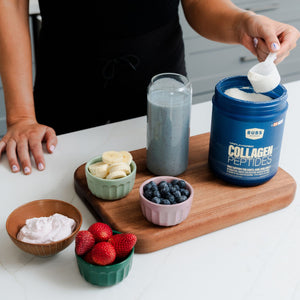
If you are struggling to eat enough calories to gain mass, you can easily "hide" collagen in calorie-dense shakes. Because it is flavorless and mixes easily into hot or cold liquids, you can add it to a smoothie with oats, peanut butter, and fruit. This allows you to get the structural benefits of the protein without feeling like you are eating a heavy meal.
Bottom line: Collagen promotes fullness, which usually helps with weight maintenance, but its easy mixability makes it a simple addition to a high-calorie bulking diet.
Does Collagen Cause Bloating or Water Weight?
A common reason people think collagen causes weight gain is the initial feeling of bloating. When you start any new supplement, your digestive system may need a few days to adjust. Some people report a "heavy" feeling in their stomach or mild water retention during the first week.
This is not fat gain. It is a temporary shift as your gut microbiome adapts to the new amino acid profile. High-quality collagen peptides are hydrolyzed, meaning they are already partially digested. This makes them much easier on the stomach than many other protein powders.
If you experience bloating, check the ingredient label of your supplement. Many brands add artificial sweeteners, fillers, or "thickening agents" like gums. These additives are often the real culprits behind digestive upset and water weight. Pure, single-ingredient collagen is rarely the cause of long-term bloating.
Why Quality Matters for Your Weight Goals
If you are concerned about weight gain, the "extras" in your supplements are your biggest enemy. Many collagen products on the market are "collagen blends" or flavored powders. These often contain:
- Added sugars or corn syrup solids
- Artificial sweeteners like sucralose
- Maltodextrin (a high-glycemic carbohydrate)
- Dairy-based creamers
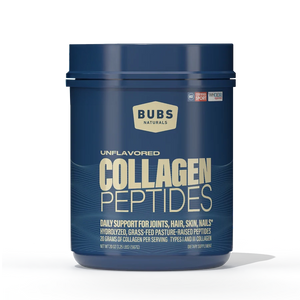
These hidden ingredients can add hundreds of calories to your day. If you are drinking a flavored collagen "beauty water" three times a day, those sugars can contribute to fat gain. This is why we focus on simplicity. Our Collagen Peptides are unflavored and contain no fillers. You get exactly what is on the label and nothing else.
Our products are also NSF Certified for Sport. This means they are third-party tested for purity and banned substances. Whether you are a professional athlete or a weekend hiker, you deserve to know that your supplements are clean. When you use a clean product, you don't have to worry about hidden calories or chemicals affecting your metabolism.
Comparing Collagen to Other Protein Sources
If your goal is weight gain, you might be comparing collagen to whey protein or mass gainers. It is important to understand where each one fits into your routine.
| Feature |
Collagen Peptides |
Whey Protein |
Mass Gainers |
| Main Goal |
Joint, skin, & tissue health |
Muscle building (MPS) |
Large caloric surplus |
| Calories |
Low (~40-80) |
Moderate (~120-150) |
High (500-1000+) |
| Amino Profile |
High Glycine/Proline |
High BCAAs/Leucine |
Varied |
| Digestion |
Very Easy (Hydrolyzed) |
Fast (may cause bloat) |
Slow/Heavy |
| Mixability |
Excellent |
Good |
Thick/Clumpy |
Collagen is not a replacement for whey or whole-food proteins like steak, eggs, and fish. Instead, it is a complementary protein. While whey triggers the growth of the muscle fiber itself, collagen supports the tendons and "sheaths" that hold those fibers together. For healthy weight gain, you want a balance of both.
Note: If you are trying to gain mass, use collagen in the morning or before bed to support tissue repair, and use a complete protein (like whey or a balanced meal) immediately after your workout.
Practical Steps to Use Collagen for Your Goals
If you want to use collagen without gaining unwanted fat, follow these simple steps:
-
Stick to Pure Peptides: Avoid flavored versions with added sugars. Choose a grass-fed, pasture-raised option that dissolves completely.
-
Monitor Your Mixers: If you put collagen in a 600-calorie latte with heavy cream and syrup, the latte—not the collagen—will cause weight gain. Mix it into black coffee, water, or a balanced smoothie.
-
Use it for Recovery: Take your collagen around your workout times. Many athletes find that taking it 30 to 60 minutes before training helps "pre-load" the joints with amino acids.
-
Pair with Vitamin C: Your body needs Vitamin C to synthesize collagen. If you aren't eating enough citrus or greens, consider a supplement to ensure your body can actually use the collagen you are taking.
-
Be Consistent: Collagen is not a "one-time" fix. It takes 4 to 12 weeks of consistent use to see changes in joint comfort and skin elasticity.
Collagen and the Metabolism
Some evidence suggests that collagen may actually support a healthy metabolism. Because it helps preserve and build lean muscle mass, it indirectly helps you burn more calories at rest. Muscle tissue is more metabolically active than fat tissue. By supporting the structural health of your muscles, you are giving your body the tools it needs to stay lean while getting stronger.
Furthermore, the amino acid glycine has been studied for its role in supporting blood sugar levels. Stabilizing your blood sugar can prevent the "spikes and crashes" that lead to intense cravings for high-calorie, sugary foods. By keeping your energy levels steady, collagen makes it easier to stick to a clean, performance-focused diet.
Key Takeaway: Collagen is a metabolic supporter. It helps you stay active by protecting your joints and helps you stay satiated by providing clean protein.
Summary of the Weight Gain Question
To circle back to the original question: is collagen good for weight gain?
If you are looking for a pill or powder that will magically make you gain fat or "bulk up" overnight, collagen is not the answer. It is far too low in calories for that. However, if you are looking for a supplement that supports a healthy, active body and helps you build a strong foundation of muscle and connective tissue, collagen is excellent.
It protects you from the injuries that stall weight-gain journeys. It provides the building blocks for your skin and hair. Most importantly, it fits into a clean lifestyle without adding the junk found in many other supplements.
Conclusion
At BUBS Naturals, we don't believe in shortcuts or chemistry-lab ingredients. We believe in high-quality fuel that helps you live a life of adventure and purpose. Whether you are trying to add lean muscle or simply maintain your current weight while staying active, our Collagen Peptides are designed to support that mission.
Every product we make is a tribute to the life of Glen “BUB” Doherty. He lived life at full throttle as a Navy SEAL and a fitness enthusiast. We carry that legacy forward by donating 10% of all our profits to veteran-focused charities. When you choose our products, you aren't just investing in your own health—you are helping us give back to the community that inspired our brand.
Gaining weight or losing it isn't about one single supplement. It’s about the work you put in every day. Use collagen as a tool to support your joints, recover faster, and stay consistent. One scoop is all it takes to start feeling the difference in how your body moves and recovers.
FAQ
Does collagen cause fat gain?
No, collagen is extremely low in calories, typically containing only 40 to 80 calories per serving. It is nearly free of fats and carbohydrates, making it very unlikely to contribute to fat storage unless you are in a significant caloric surplus from other foods.
Can I use collagen to help build muscle?
Yes, collagen can support muscle growth by strengthening the connective tissues and extracellular matrix that support muscle fibers. However, since it is not a complete protein, you should pair it with other protein sources like meat, eggs, or whey to ensure you get all the essential amino acids.
Does collagen make you look bloated?
Some people may experience mild, temporary bloating when they first start taking collagen as their digestive system adjusts. This usually subsides within a few days and can be minimized by choosing a high-quality, hydrolyzed supplement without artificial sweeteners or fillers.
Is it better to take collagen on an empty stomach?
You can take collagen at any time that fits your routine, whether that is on an empty stomach or with a meal. Many people prefer taking it in their morning coffee or a pre-workout shake to ensure they stay consistent with their daily intake.